
Luke Gardner emailed me in October 2025, telling me that he had been a listener to Our Plant Stories since day one and he had a story that he wanted to share.
My garden is Longbush cottage which I like to think is a modern cottage garden. Located in the Wairarapa New Zealand, it is filled with lots of the things that you can find in cottage gardens around the world like Roses, Hollyhocks, Lupins and many more. However at its heart it is a very much a garden of its place so I use a lot of NZ native plants. The last couple of days I have been working in a part of the garden with a lot of Harakeke (Phormium) and it suddenly dawned on me that this plant really is the soul of my garden, it’s not why people visit or what my garden is known for but I have used many different varieties in all parts of the garden.
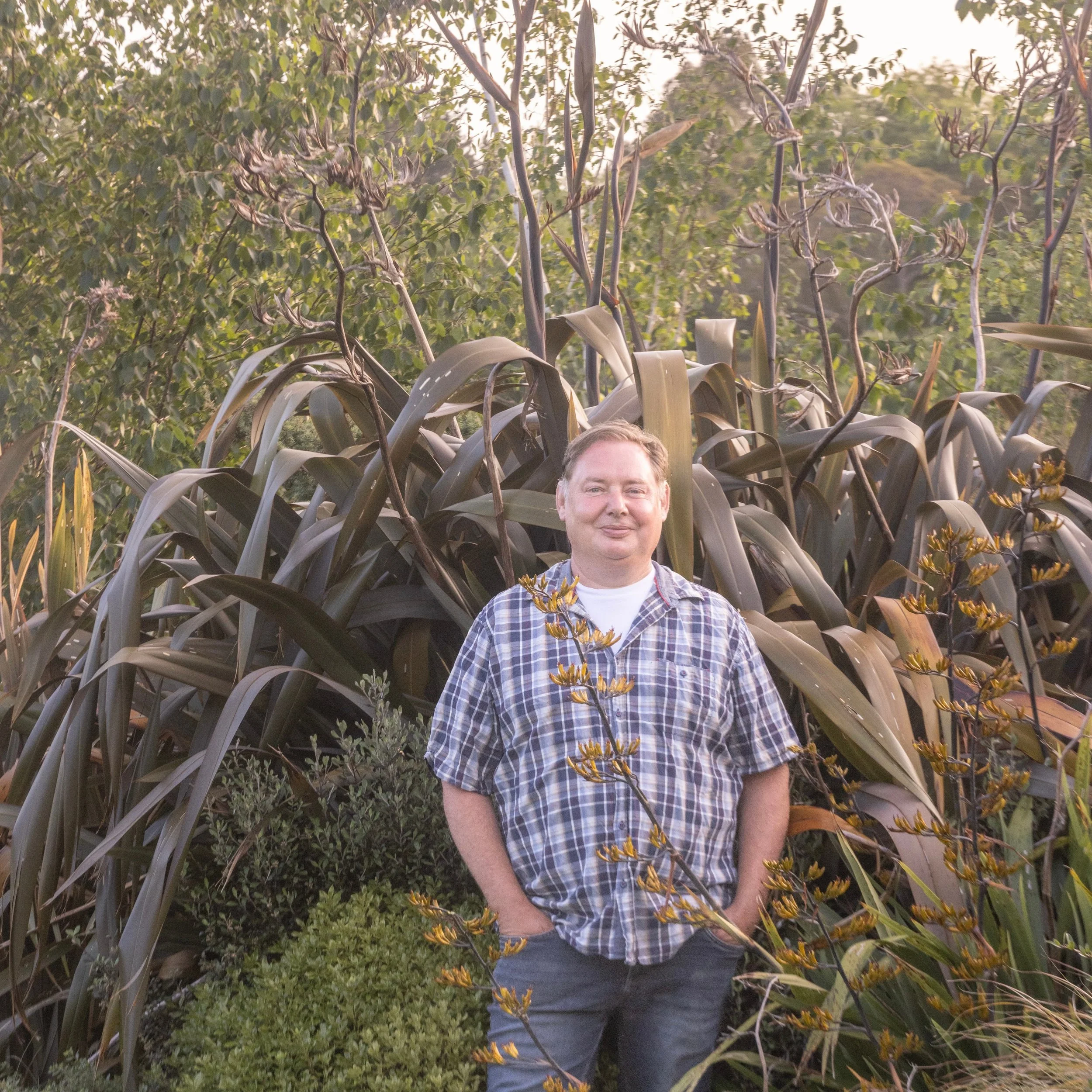
Luke in his garden - Longbush Cottage. photo by Lucia Zanmonti
Luke explains how he likes to sit on his veranda first thing in the morning or last thing at night and watch the Tui birds in his harakeke.
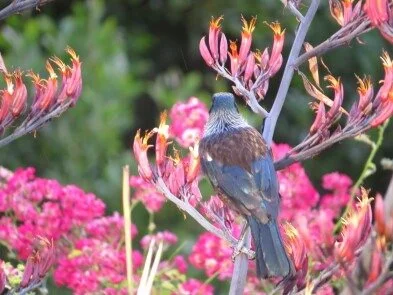
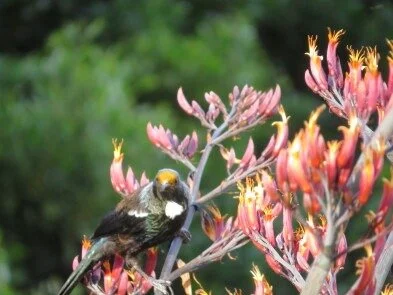
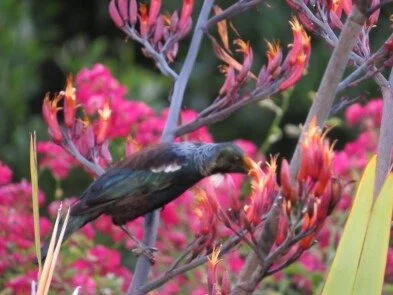
I had never seen a Tui so Luke spent some time chasing them round the garden to take a photograph for me but they were were way too quick for him, so thanks to his partner Ben for taking these!
“When we purchased the property there was no garden, stock grazed right up the front door of the cottage, and the land had been part of a working farm since the 19th century but before then this land would have been a swamp filled with Harakeke surrounded by bush (hence the name Longbush) I have been told when they burnt it the fire lasted 25 years. The removal of the forest removed the native wildlife and the thing that is bringing me the greatest joy is as the garden grows the bird and insect life that cannot exist on the monoculture of grazed pasture are coming back and thriving!”
I think there is a clue in what Luke says, that swamp flax, harakeke had been there long before the stock. Luke had grown up in a cottage garden with no native plants so he is learning about them and to really understand more about the plant we needed to speak to someone really understands this plant and the spiritual and practical significance of it to the Māori.

Edith, Larissa and Luke
With thanks to Larissa Deana Carlson who bought her friend Edith Rolls who is a Māori weaver, to visit Luke’s garden. Edith weaves with harakeke but as you will hear in this episode there is so much to learn and understand about this plant and I think the gardening connection between Edith and Luke will continue long after this episode.
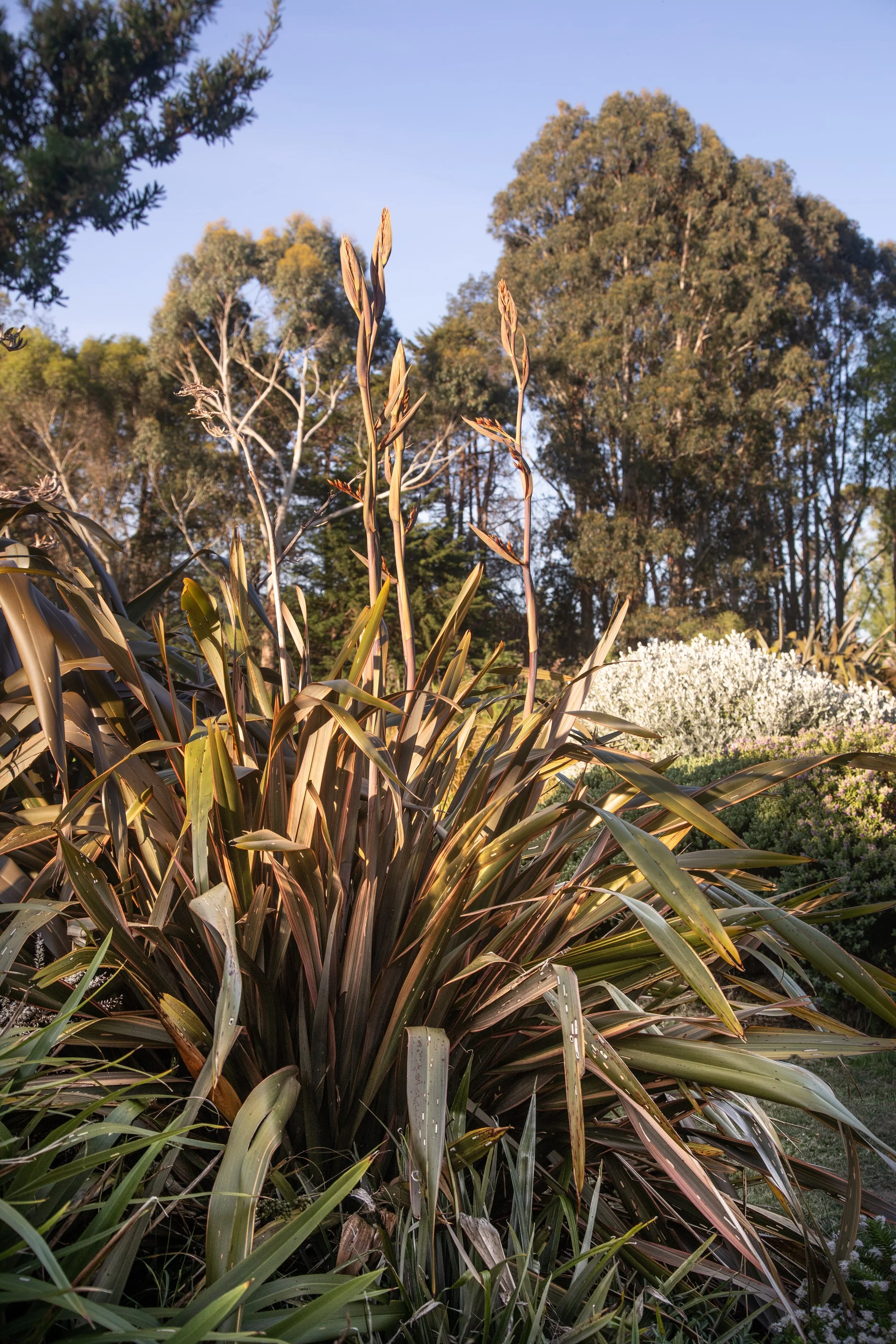
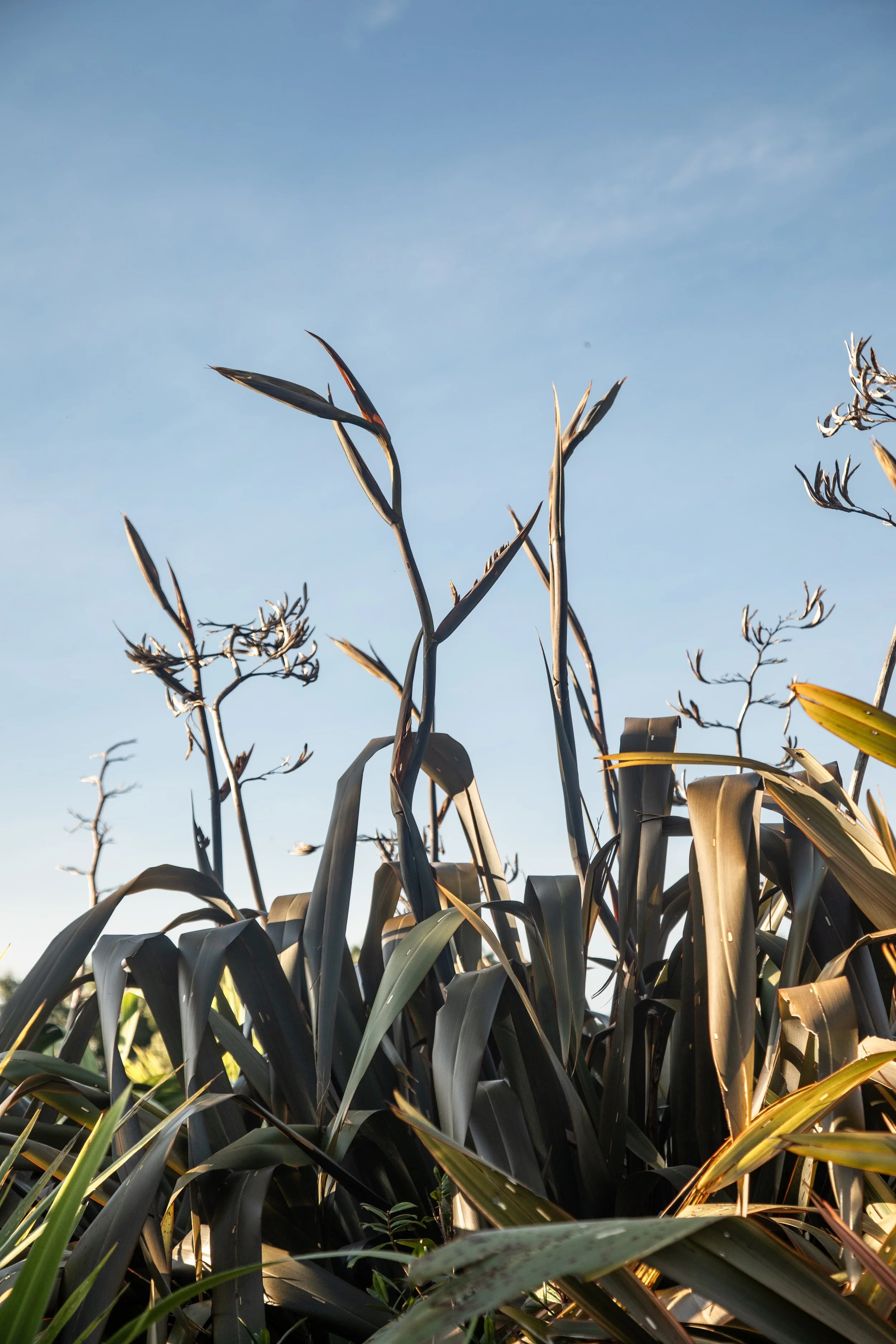
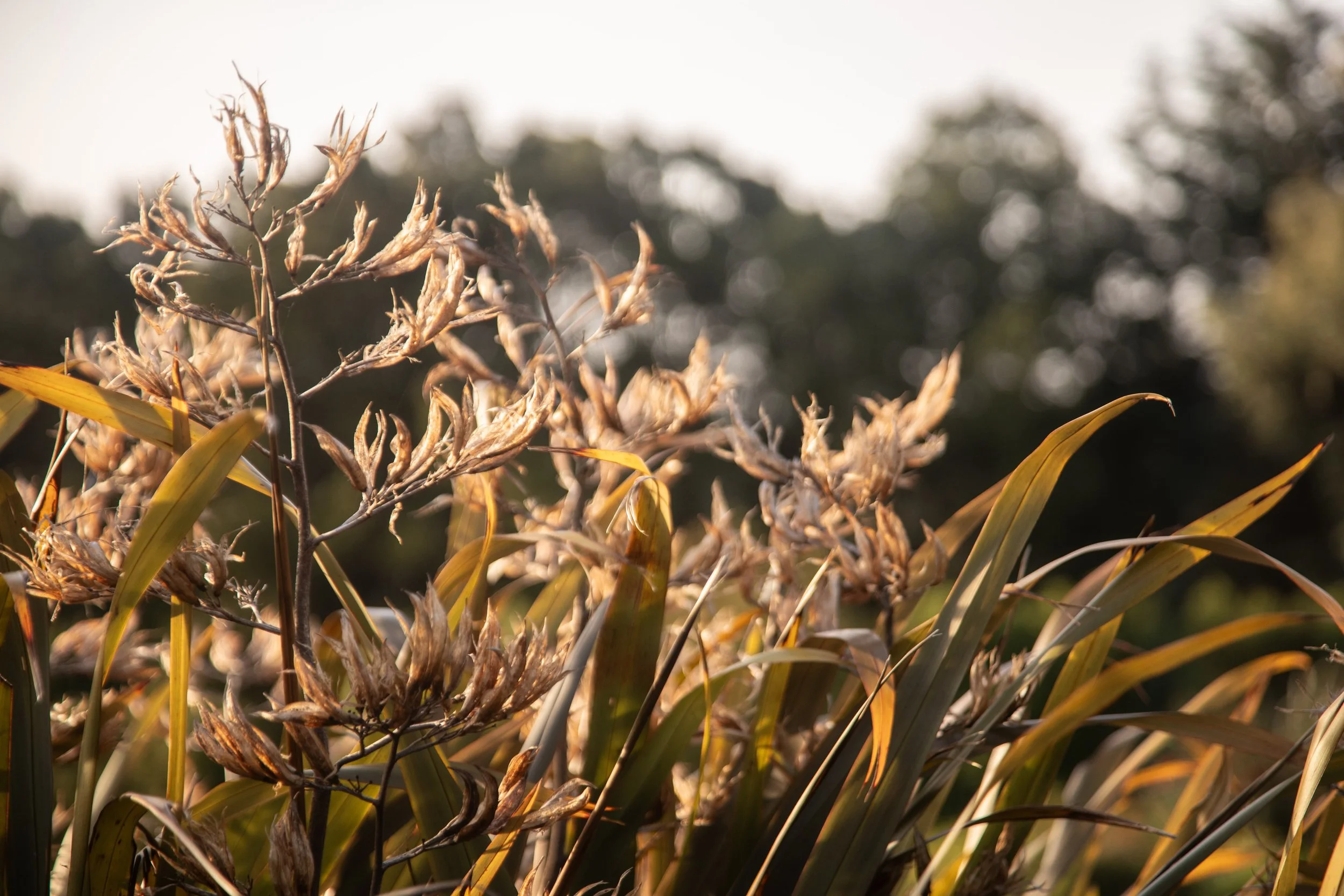
Images of the harakeke in Luke’s garden by Lucia Zanmonti
Luke’s garden at Longbush Cottage has 4 stars from the New Zealand Gardens Trust and I love the Trust’s ethos:
Gardens shape us. They connect us — to places, to history, to each other. They speak of care, creativity, and the changing seasons. They help us make sense of who we are and the land we belong to. And they offer something timeless in a world that feels anything but.
I hope you feel that Luke and Edith’s stories of harakeke do exactly this.
And Our Plant Stories has featured another garden listed by the Trust. You can hear Larnach Castle’s head gardener Fiona Eadie, talking about New Zealand native - corokia, in this episode with Mona Abboud who holds a Plant Heritage National Collection of corokia in the UK. Listen here.
How to Grow Harakeke
Here is Luke’s Advice:
It's an incredibly tough plant. So I think it would be more about thinking how much space you've got for it!
The colour palette is amazing and because of the strappy leaves you can mix it in with other plants to give you a really structured effect. I grow tulips around a pink one in my garden.
And you can grow it in a pot but overtime it will probably get too big for the pot, but you could just pull it apart.
They're really easy to propagate just by division or they're easy to grow from seed as well. I don't really feed mine and I never water the flax in summer. Even, even in a dry summer, they're tough. If you're doing a dry garden, planting the mountain flax is probably better for that than the swamp flax.
But also you could have a piece of flax sitting in a bucket just about all winter and it would cope with having wet feet and then be fine all summer with no water though I did have somebody visit from America who said that they can't grow it because the nights are too hot.
The only negative thing I could say about flax is that you need to be clearing away the dead leaves. And the best way to do that is actually with a craft knife. If you just pull and whack with a craft knife because they are quite tough and it can be quite hard with secateurs, but you can clean up around the bottom, which makes them look tidier.
When you're dividing a flax and planting it again, the best thing to do is cut it back really hard so then it won't rock around in the wind and then just poke it back wherever you want it to grow. It's incredible how quickly you'll go from a little stump a couple of centimeters tall into a great big plant. They don’t mind being cut back hard - they're indestructible!