
Horatio’s Garden
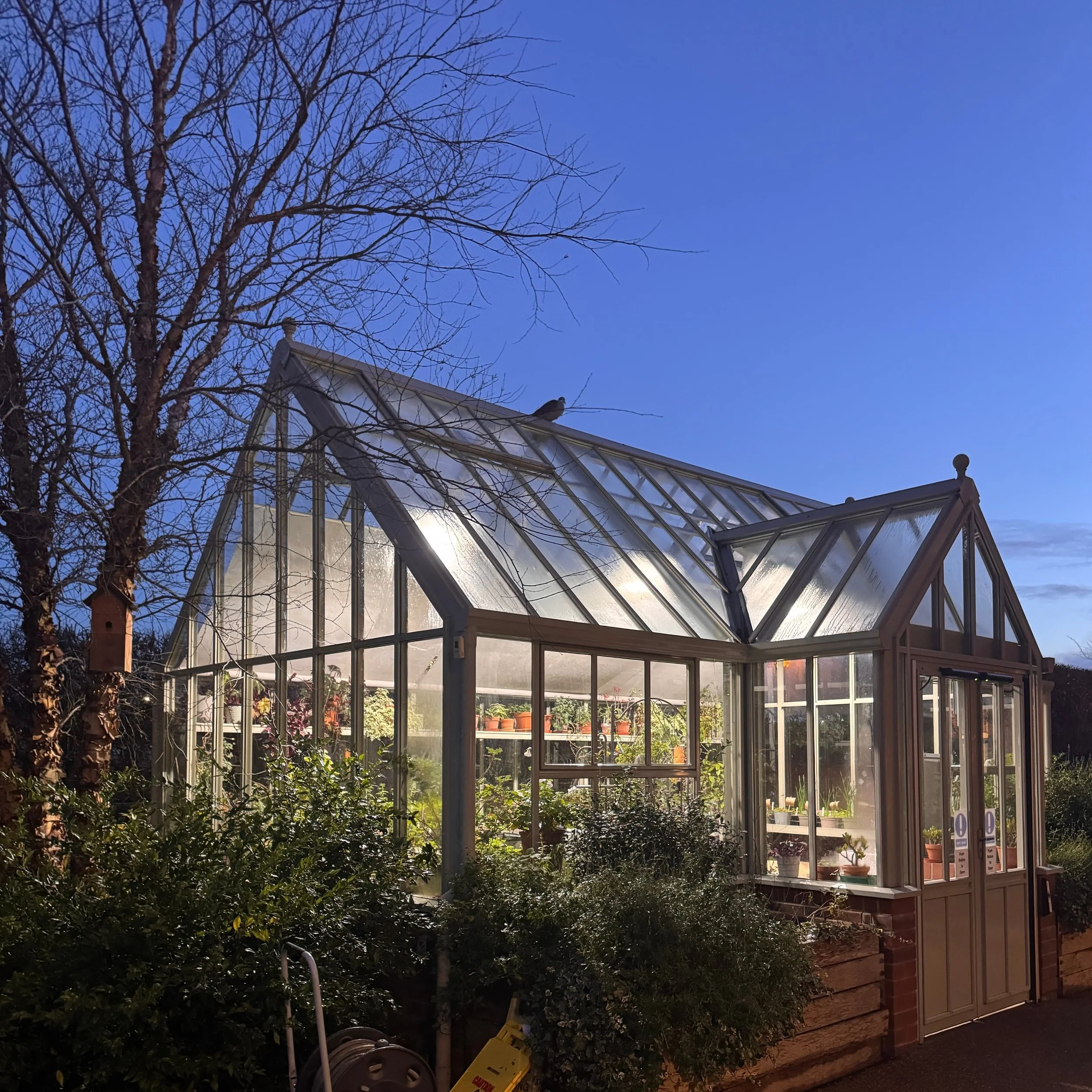
Horatio’s Garden - Salisbury
Last night, just around dusk, I visited Horatio’s Garden at Salisbury hospital. A friend has worked with patients here, teaching them photography; the plants the subject. She showed me around. It is built outside the spinal unit, where Horatio’s father still works. Horatio when volunteering on the wards, had seen the patch of land - a carpark smoking area, outside the ward and begun to sketch some plans for a garden. In 2011, aged just 17, he was tragically killed in a polar bear attack whilst on a school expedition to Norway.
After his death his parents fulfilled those plans and this garden, designed by Cleve West was built. Suddenly patients who were stuck inside 24/7 on a ward, were able to get outside, and to spend some private time with their family and friends in spaces around the garden including the greenhouse. Horatio’s parents; Dr Olivia Chapple and David Chapple created a charity called Horatio’s Garden in 2012. There are now 9 gardens in the 11 spinal units in the UK and the ambition is to have one in every unit.
The greenhouse is full of seeds and geraniums with a wheelbarrow full of books. Even in the darkening light, I could see the beauty of the tall seedheads, creating shapes and shadows and the beautiful silver birch trees. You may remember Judith’s story about silver birch trees, told in a Horatio’s garden in the Stanmore spinal unit.
This Salisbury garden is perhaps simpler than some of the more recent ones which have pods designed for patients and families designed into the plans. However being in this the first one, realising that Horatio had stood, looking out of the window of the ward, seeing the potential for nature to come to the patients, was very powerful. Realising what his mother had achieved extraordinary.
This week I have been reflecting on the 60 or so episodes of the podcast. One thing I often felt when making features for Radio 4 was that there was never the opportunity to return to a story. To find out what happened next. The network were not going to buy that sort of programme; we moved onto the next commission. The lovely thing about a podcast is we can return to the stories and find out more.
Do you remember the Fig tree story? It was one of the very early ones with the lovely Dion remembering his dad wrapping the fig trees in their and his grandfather’s garden to protect them from the Boston winters. It also featured the inspiring Mary Menniti who has been gathering the stories of the Italians who originally brought the fig tree cuttings to America, sown into the hems of their skirts or jackets. That story led me, as plant stories often do, to another Fig tree, this time in Lambeth Palace. The tree was a gift some 500 years ago from the Pope to the Archbishop of Canterbury. Imagine the gardener’s reaction seeing this tree for the first time, working out how to grow it!
I sat in the Lambeth Palace garden talking to the then head gardener Nick Stewart Smith. He had written a book on the Lambeth Palace gardens. So where is he now? Well the answer was a little surprising.
At the moment I’m in Hobart, Tasmania where I’m looking after a large garden in the valley foothills of the mountain Kunanyi. The garden’s owner is away for 4 months, so I’ve got the chance to see everything move from spring into summer. I’m learning all kinds of things about the mountain and the various wild creatures that live on the slopes, each day on the rocky pathways encountering some of the extraordinary plants growing there, several of them unique to this part of the world.
Nick has recently published a second book called Wildflowers of London.
He wrote to me from Tasmania, saying:
With my second book, Wildflowers of London, I wanted to invite the reader to come along with me to take a closer look at the urban wild, a place we all experience as it’s always all around us, even if we pass through it too quickly to give it much appreciation while hurrying on to be somewhere else.
The journey begins at dawn in a remnant of an ancient woodland hemmed in by roads. Then we continue through the early summer day visiting various other urban sites – a disused canal, a much-loved local park, a residential square, and so on. In each place, a wild plant or two becomes our focus, and I tell their stories, trying to explain why they are so much more than the dull, common weeds they might at first appear.
By nightfall, as I’m walking through the darkened streets close to my home, hopefully it has become evident that the wild things we’ve encountered on our nature odyssey are all threaded together as part of an essential green fabric, something that allows the city to stay alive and breathing.
I love this quote from the book:
“We might toil hard through the day, lopping, pruning, binding, propping, only for nature to effortlessly take over and fill the spaces as soon as darkness falls and our backs are turned. Nature seems to be another gardener with other concerns, one with a superior selection of tools and techniques, and a different way of doing things. The ultimate gardener, perhaps.
But whether it is nature ‘the ultimate gardener’ or nature designed into a space that is accessible and healing - there is no doubting its power.
Perhaps this season you might you buy this book which is a beautiful, gentle walk through a landscape, or a Fig tree which I think would make a great gift or perhaps donate some money to a wonderful charity - Horatio’s Garden.
I hope these ideas are helpful!
Have a lovely weekend
Sally
x